Introduction
Artificial Intelligence is reshaping professional services across legal work, compliance operations, data processing, and administrative support. The efficiency gains are real. Tasks that once consumed hours of repetitive effort can now be prepared much faster through structured automation.
But the most useful question is not whether AI is powerful. It is where AI helps best, and where human expertise remains non-negotiable. That is the question responsible organizations need to answer before they automate anything important.
Where AI Adds Clear Value
AI performs well in structured and repetitive environments. It is especially useful where speed, pattern recognition, and preparation matter more than final judgment.
Examples include:
- document analysis and drafting support
- financial data organization
- compliance reminders and workflow preparation
- information retrieval and summarization
In these contexts, AI can reduce manual effort materially and help professionals start from a better baseline. Used well, it improves preparation quality and frees time for review, judgment, and client-specific interpretation.
Why Speed Matters
Administrative overhead is expensive. Teams often lose valuable time to repetitive processing, document organization, data collation, or first-pass preparation. AI helps recover that time.
That matters because faster preparation allows professionals to spend more attention on tasks where judgment actually changes the quality of the outcome. In other words, AI is most valuable when it removes routine friction without pretending routine speed is the same as professional responsibility.
Where Human Expertise Remains Essential
Despite these strengths, AI should not be treated as a substitute for professional judgment. Trust-sensitive work depends on context, accountability, interpretation, and responsibility. These are exactly the areas where experts still matter most.
Human expertise remains critical for:
- interpreting complex legal or regulatory situations
- making strategic business decisions
- understanding client-specific circumstances
- handling exceptions and edge cases
- exercising ethical and professional responsibility
AI can surface information quickly, but it does not carry legal responsibility, business accountability, or professional judgment. People do.
The Risk of Using AI Without Review
The failure mode in many AI discussions is not overuse of technology. It is underinvestment in review. Organizations sometimes assume that because the output looks polished, it is ready for action. In reality, the highest-risk errors usually come from incorrect interpretation, missing context, or applying generic outputs to specific real-world situations.
That is why review cannot be an afterthought. It must be built into the operating model.
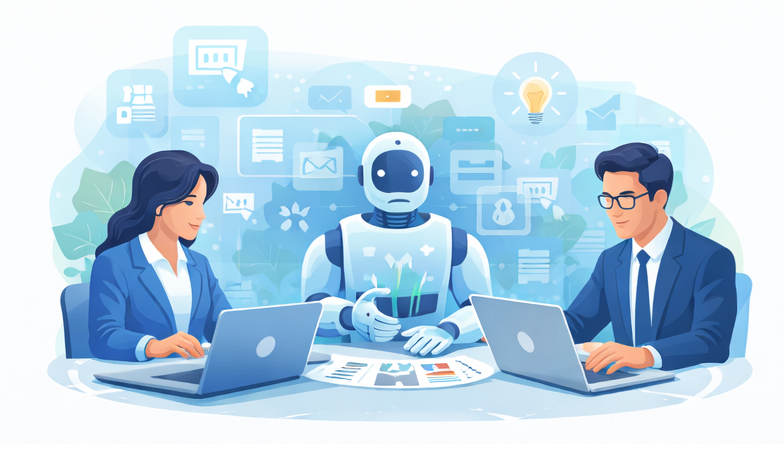
The Best Operating Model: AI Plus Expert Collaboration
The most effective approach combines technology with expert oversight. AI can support analysis, drafting structure, reminders, and preparation. Professionals then review outputs, decide what is actually relevant, make final calls, and remain accountable for the result.
This model delivers both efficiency and reliability. It captures the speed benefit of automation without creating false confidence around unreviewed decisions.
Why This Matters for SanMitra
SanMitra’s approach is built around this balance. The goal is not to replace professional reasoning with automation. The goal is to use AI where it reduces friction, while keeping final accountability with qualified experts and informed users.
A Practical SanMitra View
The right question for any team is simple: should AI make this faster, or should AI make this final? In trust-sensitive domains, the answer is almost always the first. Speed is valuable. Accountability is non-transferable.
Conclusion
AI is a powerful support tool, but it works best alongside human expertise. Organizations that combine intelligent automation with review, context, and accountability are the ones most likely to gain both efficiency and trust.