Introduction
Legal and compliance work is often judged by accuracy, but it is also shaped heavily by speed. Founders want answers quickly, filing deadlines do not move, and document preparation often consumes more time than the final decision itself. That is exactly why AI is becoming useful in legal operations.
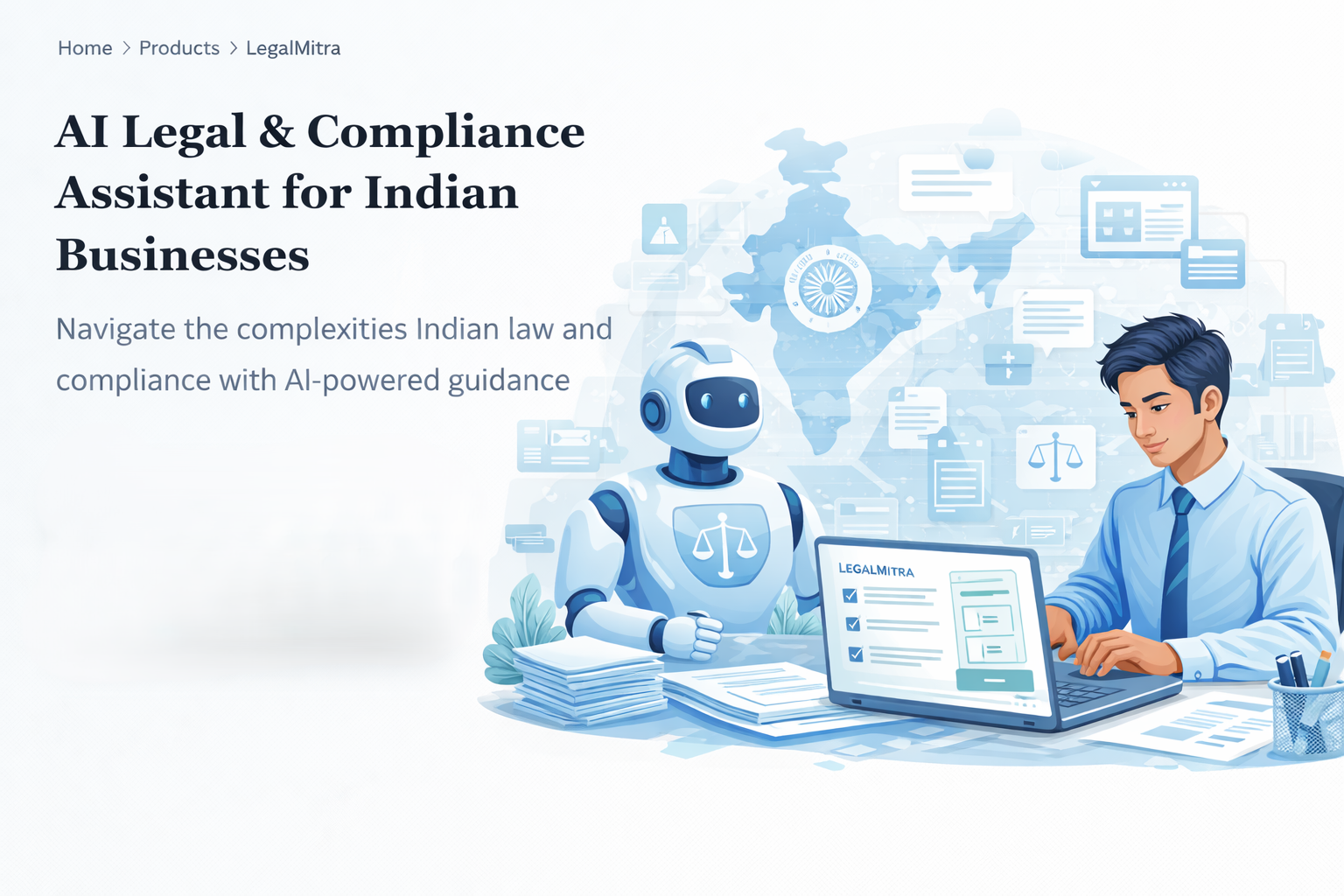
The real opportunity is not replacing professionals. It is removing the repetitive preparation work that slows them down. LegalMitra is built around this idea: let AI accelerate the routine layers of legal and compliance activity while experts retain judgment, interpretation, and accountability.
Where Legal Teams Lose Time
Many legal and compliance professionals do not lose time only on complex issues. They lose time on repetitive tasks surrounding those issues: checking document lists, preparing first drafts, tracking due dates, collecting business information, and structuring filings in a usable sequence.
When these routine tasks pile up, even experienced professionals end up spending less time on the parts of the work that genuinely require legal thinking.
Where AI Helps Most
AI is strongest when the task is structured, repetitive, and preparation-heavy. In a legal operations context, that usually includes:
- creating first-draft document structures
- organizing filing checklists
- summarizing information from documents
- tracking compliance timelines and reminders
- preparing issue-wise input for expert review
Used correctly, these capabilities can reduce administrative drag without reducing professional control.
Faster Drafting Does Not Mean Lower Standards
One of the most immediate benefits of AI in legal work is faster drafting support. Instead of starting from a blank page every time, professionals can begin with a structured first layer and then refine it to suit the actual case or client situation.
This does not remove the need for review. It simply shifts expert time away from mechanical setup work and toward legal quality, risk awareness, and business-specific interpretation.
Compliance Work Benefits from Workflow Structure
Compliance tasks such as ROC filings, GST registrations, periodic due-date monitoring, and business documentation often fail because of coordination gaps, not because the law is unknown. AI-supported workflow tools help professionals keep requirements visible, reminders consistent, and input collection more organized.
That matters because compliance quality often depends on process clarity as much as technical knowledge.
Where Experts Still Matter Most
AI can support legal work, but it should not be treated as a final authority. Professionals remain essential for:
- interpreting facts in legal context
- understanding client-specific risk
- making strategic compliance decisions
- deciding what should or should not be filed
- giving advice that carries real-world responsibility
These are not mechanical tasks. They require experience, context, and accountability. That is why LegalMitra is useful as a support layer, not as a substitute for judgment.
What LegalMitra Can Improve in Practice
A platform like LegalMitra is most valuable when it improves how professionals operate day to day. In practice, that means helping them respond faster, prepare documents more consistently, keep compliance calendars under control, and reduce avoidable administrative repetition.
The result is not just efficiency. It is better allocation of expert time.
A Better Operating Model for Legal Work
The strongest model is simple: AI prepares, experts decide. AI can organize requirements, accelerate drafting structure, and keep recurring obligations visible. Professionals then review, refine, and take final responsibility for the result.
That model improves turnaround without weakening legal standards.
A Practical SanMitra View
Legal professionals do not need technology that tries to replace them. They need technology that removes friction around them. LegalMitra is positioned around that idea: less time lost in repetitive preparation, more time spent on review, advice, and high-value legal work.
Conclusion
AI can meaningfully improve the speed of legal and compliance operations when used in the right place. It helps with drafting preparation, reminders, structuring, and information handling. But expert judgment remains central where accuracy, interpretation, and accountability matter most.
That balance is what makes AI useful in legal work without making it reckless.