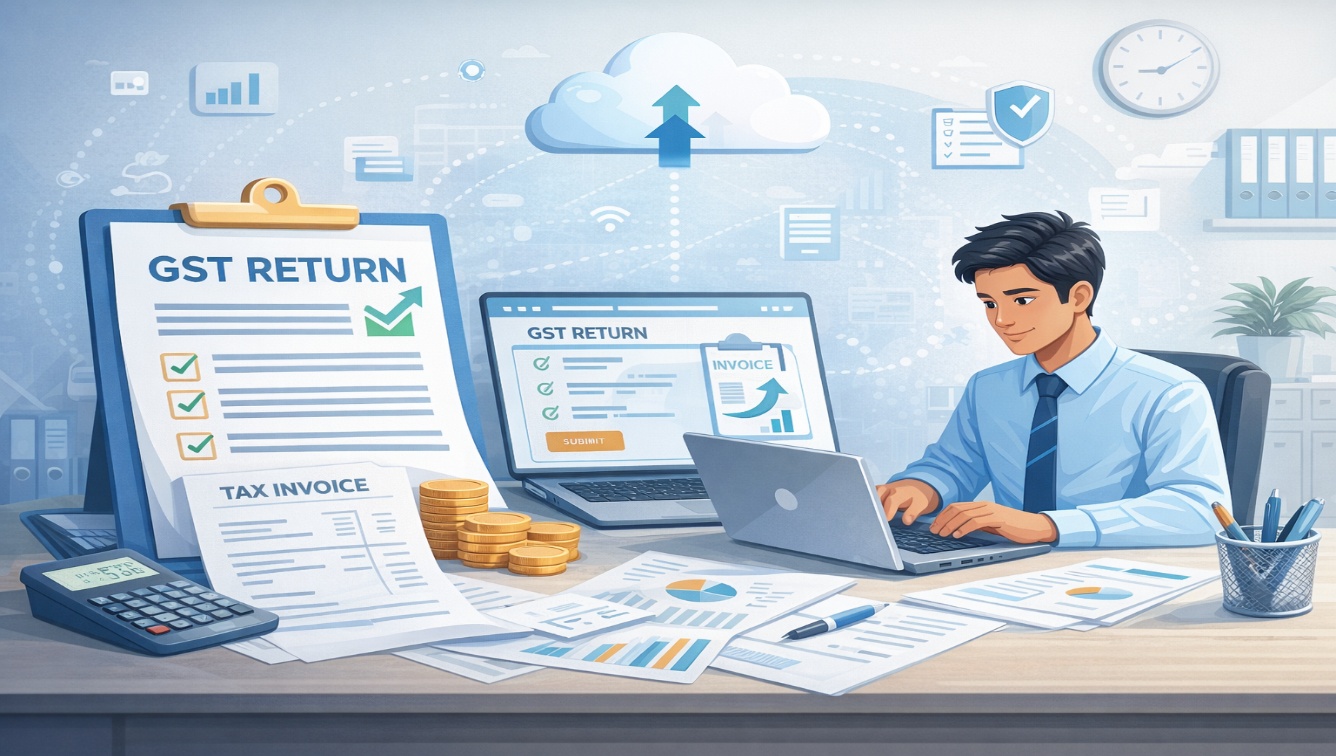
Introduction
Goods and Services Tax compliance is a critical responsibility for businesses operating in India. Timely and accurate GST return filing helps companies stay aligned with tax regulations while avoiding penalties and interest charges.
Many small and medium businesses still find GST filing confusing because the process involves multiple forms, deadlines, and reconciliation requirements. Clear process discipline reduces that compliance stress significantly.
This guide explains the key steps involved in filing GST returns online in India, but it also reflects a more practical operating view: GST compliance becomes manageable when businesses treat it as a record-quality problem, not just a filing-day activity.
Understanding GST Returns
A GST return is a document containing details of sales, purchases, tax collected, and tax paid. Registered taxpayers must file these returns periodically with the GST portal.
Some of the most common GST returns include:
- GSTR-1: Details of outward supplies or sales.
- GSTR-3B: A monthly summary return containing tax liability and input tax credit.
- GSTR-9: An annual return summarizing the financial year's transactions.
The type and frequency of returns depend on the nature and turnover of the business. The critical point is that the return form is only the final output. The real work is making sure the underlying books, invoices, and tax treatment are clean enough to support that output.
What Businesses Usually Get Wrong
Most GST errors do not happen because the portal is difficult to use. They happen because purchase data is incomplete, invoices are not reviewed on time, tax rates are applied inconsistently, or teams wait until the filing week to reconcile months of activity at once.
That pattern creates stress, rushed corrections, and preventable notices. A better workflow is to keep GST-ready records throughout the month and use return filing as the closing step, not the starting point.
Step-by-Step Process to File GST Returns
1. Maintain Accurate Records
Before filing returns, businesses should ensure that invoices and accounting entries are correctly recorded. Maintain records of sales invoices, purchase invoices, credit and debit notes, and GST collected and paid. Accurate bookkeeping simplifies the filing process.
2. Log in to the GST Portal
Visit the official GST portal and log in using your credentials. From the dashboard, navigate to the returns section and select the relevant return form for the period.
3. Upload Sales Data for GSTR-1
Businesses must upload details of outward supplies, including invoice number, customer GSTIN, taxable value, and applicable GST rate. This information forms the basis for input tax credit claims by buyers, so even minor data quality issues can affect customer-side compliance too.
4. Verify Input Tax Credit
Before filing GSTR-3B, verify purchase invoices and confirm the eligible input tax credit. Incorrect claims can lead to notices from tax authorities, so reconciliation between purchase records and supplier filings is important.
5. Calculate Tax Liability
Based on sales and input tax credit, calculate the net GST payable. Tax liability usually includes CGST, SGST, and IGST. The GST portal provides automated calculations, but businesses should still verify totals carefully.
6. Submit and File the Return
After verifying all entries, submit the return, confirm the tax liability, and complete filing using OTP or a Digital Signature Certificate. Once filed, the return becomes part of the official compliance record.
Common Mistakes to Avoid
Many businesses face penalties due to preventable errors such as missing invoices, incorrect GST rates, claiming ineligible input tax credit, and filing returns after the due date. In practice, the root cause is usually weak internal discipline rather than a lack of awareness.
A useful management habit is to review GST-facing records before the deadline window opens. That gives teams time to resolve mismatches instead of filing under pressure.
How Technology Simplifies GST Compliance
Modern finance and compliance platforms help businesses prepare GST-ready data more consistently. By organizing invoices, tax calculations, and financial reports, structured systems reduce manual errors and save time during return filing. This is where process design matters as much as software: even a good tool becomes weak if the underlying data flow is chaotic.
Automation combined with professional oversight helps businesses stay compliant while keeping management attention focused on growth.
A Practical SanMitra View
Businesses do not usually need more tax terminology. They need cleaner records, earlier reconciliation, and a filing process that does not depend on last-minute rescue work. That is the operating lens SanMitra applies to GST compliance: reduce friction early so filing becomes a controlled monthly routine.
Conclusion
GST compliance may appear complex, but with structured processes and accurate records, filing returns can become straightforward. Businesses that maintain clean records, verify tax data regularly, and follow timelines closely can reduce compliance risk materially.
As digital tools continue to improve, GST management is becoming easier and more efficient for businesses across India.